| Transparency | Transparent |
| Brand | COMPOGLASS |
| Material type | Composite sheet |
| Product line | CRYSTAL |
| GRADE | GRADE 1 |
| Country of origin | Russia |
| Standard | TU |
| Working width, mm | 2050 |
| Weight for 1 m², kg | 1.54 |
| Matte/glossy | Glossy |
| Gelcoat | No |
| UV protection | Whole sheet, mass-colored |
| Light transmission (directional light transmittance), % | 20 |
| Service life, years | 50 |
| Operating temperature, °with | -60 / +120 |
| Minimum bending radius, m | 0.125 |
| Airborne sound insulation index, dBA, min. | 16 |
| Flammability group | G4 |
| Ignitability group | V2 |
| Flame spread group | RP2 |
| Smoke generation group | D3 |
| Combustion products toxicity group | T2 |
| Tensile strength (σv), MPa, min. | 126 |
| Tensile modulus of elasticity (E), MPa, min. | 6500 |
| Flexural strength, MPa, min. | 210 |
| Transverse flexural modulus (Efl), MPa, min. | 5500 |
| Water absorption, %, max. | 0.2 |
| Barcol hardness | 50 |
| Charpy notched impact strength, kJ/m² | 38 |
| Coefficient of linear thermal expansion, °K⁻¹•10⁻⁵ | 2.2 |
| Thermal conductivity, W/(m·K) | 0.2 |
COMPOGLASS КРИСТАЛЛ плоский, прозрачный, коричневый, глянцевый, 1 мм, 2050х3050 мм

Qty:
5 965,80 ₽
in stock
The price shown is for collection from the Uglich warehouse; delivery is agreed with a manager
Specifications:
-
Article
CG-00011913
-
Thickness, mm
1
-
Width, mm
2050
-
Length, mm
3050
-
Profile
No
-
Color
Brown
-
Area, m²
6.25
-
Weight, kg
9.59
-
Unit
sheet
Fast delivery across Russia
Композитный лист COMPOGLASS КРИСТАЛЛ плоский, прозрачный, коричневый, глянцевый, 1 мм, 2050х3050 мм


What is the COMPOGLASS composite sheet?
COMPOGLASS is a composite sheet material used in facade structures, exterior cladding, and interior finishing of buildings for various purposes.
In what areas is the composite sheet used?
The material is used for cladding commercial and industrial structures, manufacturing advertising structures and signage, as well as in interior solutions where reliability and a neat appearance are important.
Can COMPOGLASS be used for facade work?
Yes, composite sheets are suitable for facades and ventilated facade systems. They are resistant to external influences and designed for long-term outdoor use.
What are the main advantages of the COMPOGLASS composite sheet?
The advantages of the material include ease of installation, low weight, high strength, resistance to the environment, and a long service life without loss of performance characteristics.
Where can I purchase the COMPOGLASS composite sheet?
Composite sheets can be purchased from the official manufacturer — ETIZ Composite LLC. To receive a consultation and place an order, simply submit a request on the website or contact the company's managers.
How does the difference in elastic modulus affect the use of polycarbonate and fiberglass in construction?
The elastic modulus is a key indicator of stiffness. Polycarbonate (2,200–2,600 MPa) is flexible and impact-resistant, making it ideal for arched structures, canopies, and complex-shaped translucent coverings. Its ability to bend without breaking opens wide design possibilities. Fiberglass (5,500–7,800 MPa), thanks to reinforcement, is 2–3 times stiffer. This property allows creating roofs and canopies with increased sheathing spacing, saving materials and reducing the overall weight of the structure. Thus, the choice is determined by the engineering task: where flexibility is needed, polycarbonate is chosen; where the priority is load-bearing capacity and minimal deflection, fiberglass is preferred.
What is the key difference in UV protection between the materials and how does it affect their service life?
The approach to UV protection is fundamentally different. Polycarbonate is protected by a co-extruded layer — an effective but localized barrier. Its damage leads to rapid degradation of the material in that area. Fiberglass uses a multi-level protection system: UV-resistant resin throughout the mass, surface gelcoat, and barrier film. This combination provides resistance not only to sunlight but also to chemicals, and damage to the top layer does not lead to instant destruction of the entire sheet. The comprehensive approach lays the foundation for a longer service life of fiberglass (25+ years) compared to polycarbonate (15–20 years) under intense insolation conditions.
Why is less transparent fiberglass often chosen over polycarbonate for industrial greenhouses?
The choice in favor of fiberglass is driven by its specialized advantages critical for agro-industrial complexes. Its main advantage is creating diffused light that uniformly penetrates deep into the canopy, unlike the directed light of polycarbonate. Such illumination prevents plant burns and stimulates photosynthesis, which directly increases yields. Furthermore, fiberglass is chemically inert to pesticides, fertilizers, and aggressive washing, whereas polycarbonate can become cloudy and crack. Low thermal expansion ensures geometric stability and airtightness of a large greenhouse during temperature fluctuations, making operation more reliable and predictable.
How resistant is the material to loads?
The composite sheet maintains its strength characteristics under mechanical and vibration loads, while its low weight reduces the load on structural elements compared to traditional materials.
Is the composite sheet subject to corrosion or fading?
The material is not subject to corrosion, is resistant to fading, chemical and biological factors, which allows it to maintain its appearance for many years.
What is the service life of the composite sheet?
With proper installation and operating conditions, the service life of the composite sheet can reach 50 years without deterioration of its properties.
Does COMPOGLASS have thermal and electrical insulation properties?
The material has a low thermal transmittance coefficient, is not an electrical conductor, and practically does not change dimensions with temperature fluctuations, which positively affects the reliability and energy efficiency of structures.

ISO 9001:2015 Certificate ETIZ Composite valid until 10.10.2027

Compliance Certificate Composite Sheet valid until 03.12.2027

Fire Compliance Certificate Composite Sheet valid until 23.02.2028

COMPOGLASS Composite Sheets General Presentation 2025

Letter on composite sheet waste

COMPOGLASS Warranty

Profiled sheet roofing installation guide_short

COMPOGLASS Storage Transportation Installation and Operation Rules
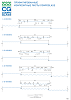
COMPOGLASS Profile Summary Sheet
COMPOGLASS Drawing Profile C-8 1200(1150)
COMPOGLASS Drawing Profile C-10 1050(1010)
COMPOGLASS Drawing Profile C-20 1150(1100)
COMPOGLASS Drawing Profile C-21 1051(1000)
COMPOGLASS Drawing Profile C-25 1150(1075)
COMPOGLASS Drawing Profile SV-38 760(665)
COMPOGLASS Drawing Profile SV-38 950(855)
COMPOGLASS Drawing Profile SV-38 1200(1140)
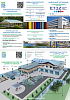
COMPOGLASS Booklet A4 Composite Sheets
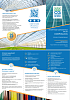
COMPOGLASS Booklet A4 Composite Sheets. Why Choose
COMPOGLASS Drawing Profile C-12 1050(1010)
COMPOGLASS Installation Guide Fences and Enclosures
COMPOGLASS Installation Guide Non-profiled Sheet Structures
COMPOGLASS Installation Guide Profiled Sheet Roofing
COMPOGLASS Installation Guide Profiled Sheet Roofing_short
COMPOGLASS ATR Non-profiled Sheet Roofing
COMPOGLASS ATR Profiled Sheet SV-38 Roofing
COMPOGLASS ATR Non-profiled Sheet Awning 1250x6000x2
COMPOGLASS ATR Non-profiled Sheet Awning 2100x6000x2
COMPOGLASS ATR Non-profiled Sheet Greenhouses
COMPOGLASS Load Calculation Flat Sheet
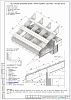
COMPOGLASS DETAILS Wooden Roofing Non-profiled Sheet Overlap
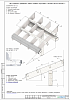
COMPOGLASS DETAILS Wooden Roofing Non-profiled Sheet Flush Overlap
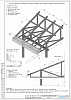
COMPOGLASS DETAILS Metal Roofing Non-profiled Sheet Overlap
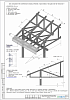
COMPOGLASS DETAILS Metal Roofing Profiled Sheet C-20 Combined with Metal Sheet
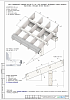
COMPOGLASS DETAILS Roofing Fastening 4 Sheets Overlapping with Trimming
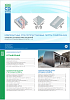
COMPOGLASS ATR Profiled Sheet C-20 Roofing
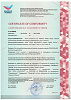
Сертификат соответствия Компогласс Сделано в России до 28.04.2028
Product advantages of COMPOGLASS Composite Sheet
Easy installation and operation
Sheets are easily cut, drilled, and fastened with standard tools. Precise geometry simplifies installation and minimizes waste.
Details
Easy installation and operation
High insulation properties
Has extremely low thermal conductivity, minimal thermal expansion, and does not conduct electricity, ensuring safety and energy efficiency.
Details
High insulation properties
Lightweight and strong
The material is significantly lighter than metal and concrete, yet resistant to impacts, vibrations, and snow loads. Reduces structure weight and increases their reliability.
Details
Lightweight and strong
Maximum durability
The composite sheet is not subject to corrosion, fading, chemical or biological exposure. Does not support combustion and lasts up to 50 years without losing properties.
Details
Maximum durability