

Greenhouses
COMPOGLASS — fiberglass for greenhouses and cold frames, a cost-effective polycarbonate alternative
|
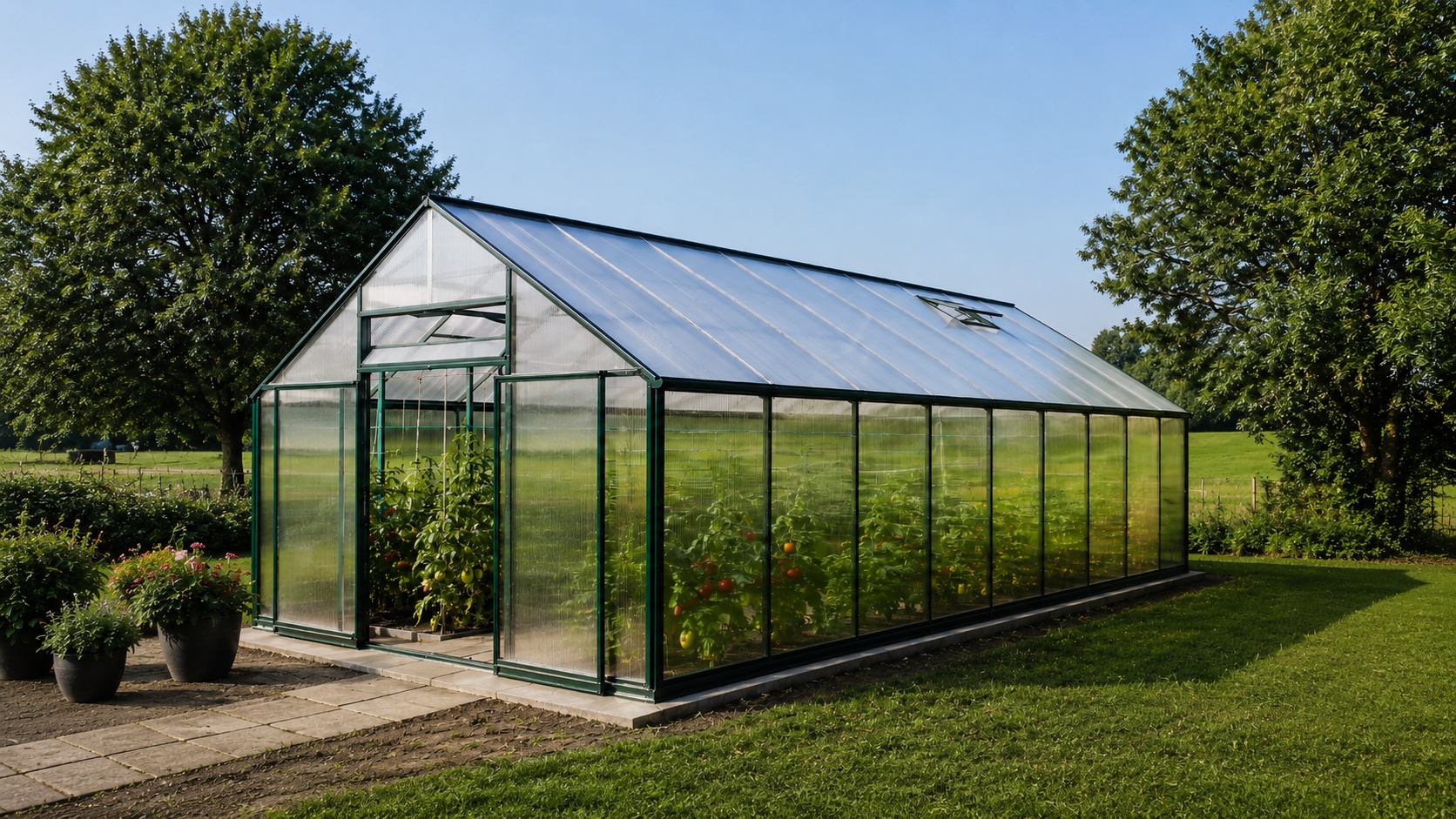
COMPOGLASS — fiberglass sheeting for greenhouse and cold frame covers. This material is chosen when you need a durable greenhouse, resistance to moisture and agrochemicals, strength under loads, and beneficial diffused light for plants. If you are choosing a new greenhouse or looking for a polycarbonate replacement, COMPOGLASS can be considered as a modern alternative for backyard, farm, and commercial greenhouses. It works not just as a covering, but as a light management element inside the greenhouse.
|
|
|
up to 87%
light transmittance depending on the type
|
2.7 times
stronger than polycarbonate by stated characteristics
|
up to 25 years
estimated service life with proper selection and installation
|
no dirt or mold
no internal channels for dirt, moisture, and mold
|
|
Key concept
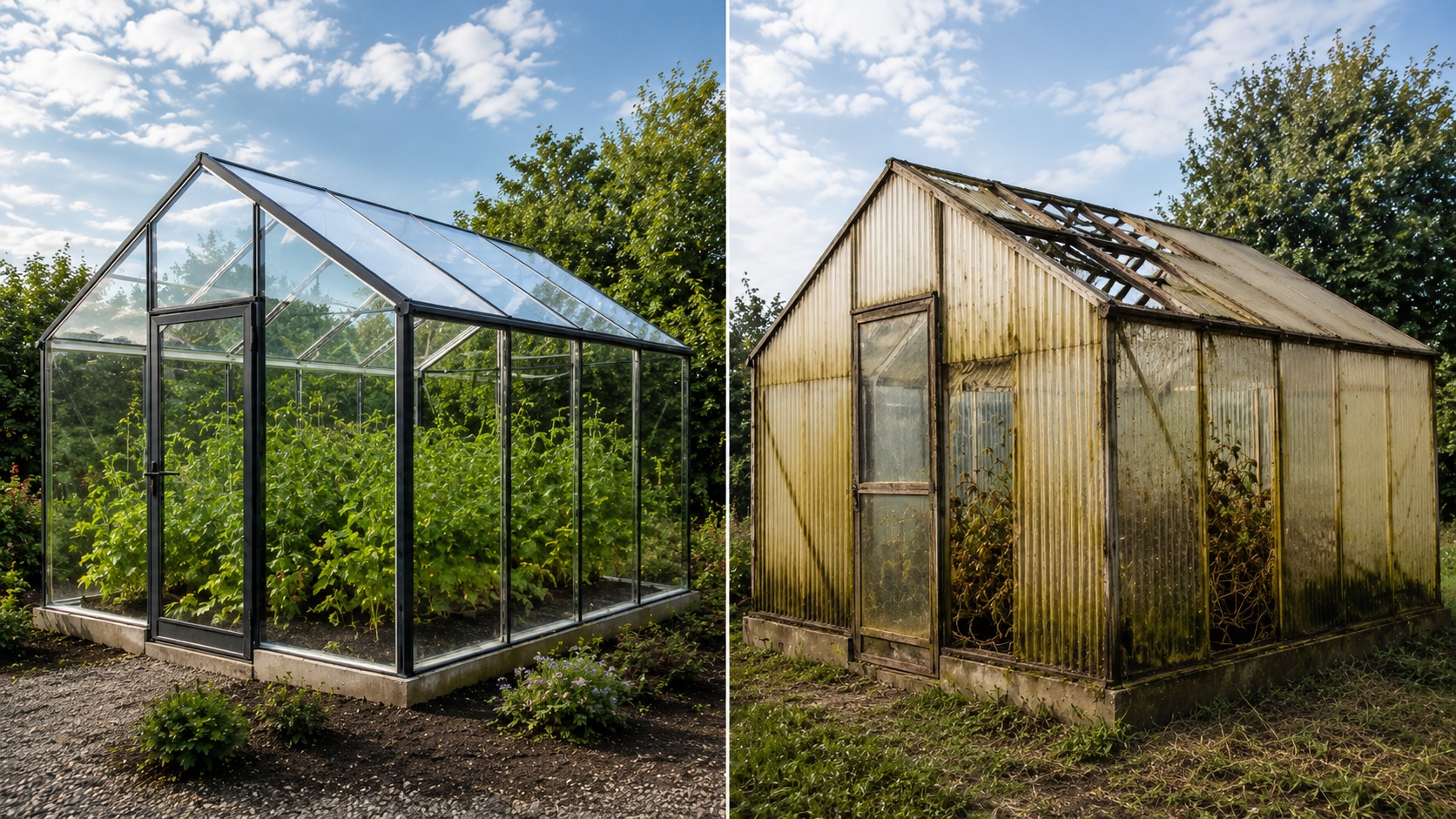
COMPOGLASS instead of polycarbonate for your greenhousePolycarbonate is a common solution, but over extended use it can accumulate problems: loss of transparency, yellowing, channel contamination, brittleness, complex installation, and the need for periodic replacement. COMPOGLASS instead of polycarbonate is a solution for those who need a more durable, strong, and stable covering with lower maintenance effort. The material has no internal cells, is reinforced with fiberglass, resistant to moisture and chemically aggressive environments, and evenly diffuses light inside the greenhouse. |
|
What tasks does a greenhouse covering perform
1. Provides plants with uniform lightDirect light causes overheating, sharp shadows, and uneven crop growth. COMPOGLASS transmits photosynthetically useful light and distributes it inside the greenhouse. |
2. Lasts longer than a seasonFilm usually lasts one season, and cellular polycarbonate often needs replacement after a few years. This means a repeated cycle: select, buy, deliver, remove old covering, dispose of it, and install new one. COMPOGLASS is designed for longer service. It has no channels where moisture and dust accumulate, maintains light transmittance longer, and reduces the number of replacements. |
3. Withstands aggressive environmentsInside a greenhouse there is always condensation, fertilizers, plant protection products, and regular washing. The covering must be resistant to chemicals, moisture, and biological contamination. |
4. Withstands snow, wind, and hailThe higher the covering's resistance to loads and impacts, the lower the risk of damage, leaks, and unplanned repairs. |
COMPOGLASS vs polycarbonate: parameter comparison
High plant illumination for yearsCellular polycarbonate may lose light transmittance over time: moisture and dust accumulate in channels, the material may become cloudy and yellow. COMPOGLASS has no cavities or channels, with a high light transmittance coefficient — up to 87% depending on the type. |
Uniform lightPolycarbonate, like glass, barely diffuses light. COMPOGLASS provides beneficial diffused light for plants inside the greenhouse — no "hot spots", sharp shadows, or localized overheating. Diffused light can promote yield growth and reduce ripening times. The actual effect depends on the crop, region, agricultural practices, and greenhouse design. |
|
UV resistance and durabilityPolycarbonate is sensitive to ultraviolet radiation and usually has a protective coating. If the protection is damaged or low quality, the material may yellow, become cloudy, and lose strength. COMPOGLASS has enhanced UV resistance, and additional special protection is distributed throughout the material mass. The sheet is more durable under constant sun exposure. |
Resistance to moisture and agrochemicalsPolycarbonate can be sensitive to certain fertilizers, household chemicals, and plant protection products. Cellular sheets collect condensation and dust in internal channels. COMPOGLASS is moisture resistant, does not corrode, withstands regular washing and exposure to household chemicals, fertilizers, ammonia, and plant protection products with proper type selection. |
|
StrengthCOMPOGLASS is 1.7–2 times stronger than polycarbonate. The fiberglass-reinforced structure withstands wind, snow, hail, and routine maintenance. |
Installation, maintenance, and repairCellular polycarbonate requires special profiles, thermal washers, thermal gaps, and careful installation. COMPOGLASS is quickly fastened with standard roofing screws. The material is easier to clean: it has no cells or internal channels. Unlike polycarbonate, which often requires full sheet replacement, COMPOGLASS as a glass composite can be repaired. |
|
|
We will help select the right material for your project
Leave your contact details, we will help choose the right material and calculate the exact quantity.
|
Submit a request |
Polycarbonate for greenhouse or COMPOGLASS: an honest comparison
COMPOGLASS pros and cons in brief
Pros
- Consistent illumination and beneficial diffused light
- Strength 1.7–2 times higher than polycarbonate
- Resistant to UV, moisture, fertilizers, ammonia, plant protection products, and washing
- No cavities for accumulating dirt and mold
- Service life up to 25 years
- Less hassle with covering replacement and maintenance
Cons
- Price is higher than cellular polycarbonate
- Requires proper selection of fasteners and sheet profile for the specific greenhouse
When polycarbonate or film is a reasonable choice: if you need a seasonal cold frame at minimal cost or a greenhouse for a few seasons.
When COMPOGLASS is justified: if you don't want to regularly replace the covering, and appearance, operational comfort, agrochemical resistance, and durability are important.
Who will benefit from COMPOGLASS
- Greenhouse and cold frame owners
- Farmers
- Greenhouse manufacturers
- Agricultural complexes
- Design and construction organizations
Life cycle cost comparison: polycarbonate vs COMPOGLASS greenhouse covering
Polycarbonate is usually cheaper to buy. But its cost doesn't end at the sheet price: when replacing, you need to select material again, buy and deliver sheets, remove old covering, dispose of waste, and perform installation. That's your time and money.
COMPOGLASS is more expensive upfront, but with a service life of up to 25 years, it reduces the number of replacements, owner's labor costs, and maintenance expenses. Below is a comparison of typical polycarbonate and COMPOGLASS life cycle scenarios over a 25-year horizon. To avoid tying to specific prices, the cost of polycarbonate for initial covering is taken as 100 units.
Conclusion: if you only count the sheet price, polycarbonate is cheaper. If you count the entire greenhouse covering life cycle, COMPOGLASS can be more cost-effective: one installation instead of multiple cycles of purchasing, removal, disposal, and replacement.