← Back to list

Thermal insulation, foam glass ETIZ Thermo 550x550x50 mm, 150 kg/m³

Price per:
Qty:
in stock
Specifications:
  • Thermal conductivity

    0,045 W/(m·K)

  • Flexural strength

    130

  • Article

    ПС-00011290

  • Density

    150

  • Size

    550*550*50

  • Unit

    pcs.

Fast delivery across Russia

Теплоизоляция, паростекло ЭТИЗ Термо 550х550х50мм, 150 кг/м3 — негорючая (НГ) плита из паростекла ЭТИЗ, произведённая холодным вспениванием натриевого жидкого стекла.

Материал не горит, не даёт усадки, не боится влаги и сохраняет свойства десятилетиями. Применяется для тепло- и звукоизоляции стен, кровель, полов и потолков.

Thermal conductivity 0,045 W/(m·K)
Pieces per pack 1
Compressive strength 360
Flexural strength 130
Insulation thickness 50
GRADE Grade 2
Size 550*550*50
Flammability group NG (non-combustible)
Noise barriers and structures
Details
Roofing and attics
Roofing and attics
Details
Fences
Fences
Details
Partitions
Partitions
Details
Warehouses
Warehouses
Details
Facade insulation
Facade insulation
Details
Medical facilities
Medical facilities
Details
Building walls
Building walls
Details

Ask about this product

In what form is ETIZ Foam Glass produced?
ETIZ Foam Glass is produced as 600×600 mm boards. The board is rigid and has an open porous structure. Thicknesses: 50, 60, and 100 mm.
Is work being done to develop ETIZ Foam Glass with a higher strength limit?
The compressive strength of ETIZ Foam Glass at 120 kg/m³ density = 240 kg/m², at 180 kg/m³ = 360 kg/m². These characteristics are quite sufficient for  the use of ETIZ Foam Glass as a thermal and sound insulation material in modern construction.
Is the density of ETIZ Foam Glass important for thermal insulation?
The thermal insulation properties of a material are determined by thermal conductivity, while density affects mechanical and strength characteristics. Each material has its own relationship between thermal conductivity and density. ETIZ Standard with a density of 120 kg/m³ has a thermal conductivity of 0.045 W/m·K and differs by only 0.005 W/m·K from ETIZ Strong with a density of 180 kg/m³.
Will the consumption of primer (plaster) mixtures increase when applied to ETIZ Foam Glass?
No, the consumption of filler will be the same as with traditional thermal insulation materials, and primer consumption is comparable to application on porous building materials.  Mixture consumption depends largely on the method of application to the surface.
Will ETIZ Foam Glass be destroyed when moisture freezes inside it?
No, the material will not be destroyed. Thanks to the open-pore structure, water has room to expand when freezing, so this has no consequences for the material. After thawing, the material dries under natural conditions (and positive temperatures)  without loss of physical properties and dimensions. Tests showed 100 freeze-thaw cycles without crack formation or swelling. In case of accidental wetting of ETIZ Foam Glass in a structure, dismantling will not be required.
Does ETIZ Foam Glass have an odor?
No. The material's chemical composition is pure quartz sand. It is a completely inert material and is not toxic.
Do mice gnaw on ETIZ Foam Glass?
No. Our material is inorganic. Its chemical composition is pure quartz sand and soda, so mice do not eat it, and certainly do not build nests in it.
How does ETIZ Foam Glass differ from traditional foam glass?
ETIZ Foam Glass is a next-generation foam glass. However, despite the fact that the raw materials for ETIZ Foam Glass and traditional foam glass are similar, the manufacturing technology and, consequently, a number of their properties are  different. They differ especially in that ETIZ Foam Glass is a vapor-permeable material, while traditional foam glass is not.
How does ETIZ Foam Glass differ from expanded polystyrene?
■ ETIZ Foam Glass is produced from sodium silicate (liquid glass), which makes it non-combustible and, most importantly, it does not emit harmful substances under high temperatures. Foamed plastics, polystyrenes are organic materials and release a number of toxic gases when burning.
■ ETIZ Foam Glass is an environmentally friendly material.
■ ETIZ Foam Glass has good vapor permeability properties, unlike polystyrene, especially extruded polystyrene. Using a vapor-impermeable material in your home, you "seal" the air, which negatively affects the indoor climate and requires additional building ventilation. Moisture must escape from the structure, otherwise an environment for mold and mildew development forms, and living conditions become uncomfortable.
■ ETIZ Foam Glass is more durable since it consists only of natural mineral components, while materials containing artificial organic substances serve less due to the degradation of organic constituents. As a result — loss of shape and properties.
■ Mice (insects) do not gnaw on ETIZ Foam Glass and do not make passages or burrows in it.
How does ETIZ Foam Glass differ from mineral wool?
ETIZ Foam Glass:
■ 100% mineral material that does not contain phenol-polymer binders.
■ Easy to install (including easy to saw and plaster), does not release prickly small particles. Compatible with any cement-based mortars.
■ Chemically and physically homogeneous throughout its entire volume.
■ Has precise and stable geometric dimensions throughout its entire service life (without sagging or settling). Thanks to tight board fit during installation, heat loss through "cold bridges" can be reduced to zero.
■ Resistant to rodents and insects, mold formation.
■ In case of accidental wetting, thanks to the open porous structure, it dries completely without loss of properties and dimensions.
■ Does not require additional maintenance during its service life, as the material does not degrade over time.
■ Based on the combination of physical, mechanical, and chemical properties, ETIZ material can be defined as more durable.

P.S. In pursuit of low densities, mineral wool manufacturers lose "strength," thereby significantly reducing its service life.
Is ETIZ Foam Glass soluble in water? What is its water absorption?
ETIZ Foam Glass is a water-insoluble material.
If the dew point reaches the junction between the wall and any vapor-impermeable insulation, moisture can accumulate there, which will subsequently lead to mold and mildew formation. ETIZ Foam Glass breathes, so even if moisture forms at the junction, it evaporates without changing the foam glass properties. ETIZ water absorption is 205%.
If an ETIZ Foam Glass board has cracked — can it be glued?
It all depends on the nature of the crack.  If installation was performed correctly in compliance with all building standards, this should not happen in principle.  Only if physical force was applied to the material. A joint gap of 3–6 mm can be glued with standard cement-based adhesive. For a gap of 1–2 mm, flexible polymer adhesive is used.
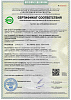
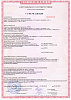
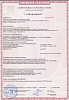
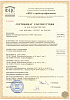
Certificate
200925 Expert opinion ETIZ foam glass Moscow Hygiene Center.pdf
Test report
Acoustic test results report.pdf
Manual, operating rules
Quality guarantee policy.pdf
Manual, operating rules
Transportation instructions.pdf
Test report
Laboratory sanitary and hygienic research protocol.pdf
Certificate
Fire protection compliance certificate (Group 1 fire protection efficiency).pdf
Certificate
Environmental safety compliance certificate for ETIZ foam glass.pdf
Certificate
Fire Protection Compliance Certificate.pdf
Certificate
Non-combustibility Compliance Certificate.pdf
Certificate
Compliance Certificate from FCS-stroycertification.pdf
Certificate
Quality Management System Compliance Certificate from Promtekhstandart.pdf
Certificate
Technical Certificate of the Republic of Belarus.pdf
Certificate
Compliance Certificate for ETIZ Sodium Liquid Glass valid until 05.07.2026
Certificate
Compliance Certificate Liquid Glass valid until 05.07.2026
GOSTs and standards
GOST R 72564-2026 Thermal insulation and sound-absorbing products based on foamed liquid glass. Specifications
Product advantages of ETIZ Foam Glass Thermal Insulation
Environmental friendliness
Environmental friendliness and safety of ETIZ thermal insulation confirmed by certificate No. 155 dated 20.09.2011
Details
Sound insulation
Thanks to its open-pore structure, ETIZ Foam Glass reflects airborne sounds and absorbs impact noise.
Details
Low thermal conductivity
Unlike other insulation materials, ETIZ board joints do not create "thermal bridges"
Details
Fire resistance
The company's products are non-combustible (building material fire hazard class KM0)
Details