



Environmental friendliness
Environmental friendliness and safety of ETIZ thermal insulation confirmed by certificate No. 155 dated 20.09.2011
Details

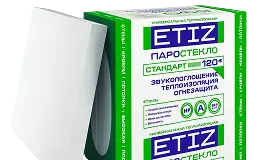
ETIZ Foam Glass is a fully mineral, environmentally safe insulation material that does not contain harmful chemicals, resins, or polymers. The material does not emit toxic substances, has no odor, and is completely safe in use.
The main raw material is liquid silicate glass, produced from natural components: quartz sand and soda. During installation and use, foam glass does not produce harmful fibers.
The material has passed laboratory tests and holds:
— Environmental safety compliance certificate (30.08.2019),
— Certificate "Environmental friendliness and safety of ETIZ thermal insulation" No. 155 (20.09.2011).
ETIZ Foam Glass features high vapor permeability, allowing structures to "breathe" and create a comfortable indoor microclimate. It is resistant to aggressive environments, not subject to aging, mold, rot, and is not damaged by rodents.
ETIZ Foam Glass has high sound insulating and sound absorbing properties thanks to its open-pore structure that effectively dampens sound waves. The material isolates external noise and reduces internal sounds.
The airborne sound insulation index in structures with ETIZ reaches 54 dB, with a standalone sound insulation rating of 27 dB, allowing the material to be used in premium comfort buildings. Structures with ETIZ meet the "Noise Protection" requirements.
An important advantage is the material's rigidity, allowing it to be attached to the base as a continuous layer without guides, which typically become "sound bridges".
ETIZ Foam Glass has passed acoustic testing and is classified as the highest sound absorption class "A".
ETIZ Foam Glass has high thermal insulation properties: thermal conductivity coefficient λ = 0.045–0.050 W/(m·°C). At high density, the material has one of the lowest thermal conductivity values among common insulation materials. In terms of efficiency, foam glass is comparable to mineral wool materials: a 10 cm layer is equivalent to a 108 cm brick wall.
Thermal performance is maintained throughout the entire service life. In terms of frost resistance, the material's service life reaches 100 years.
ETIZ boards have even edges and are installed butt-to-butt without gaps, eliminating heat loss through joints. Thanks to their rigidity, in many cases it is possible to forgo joists and guides that create "thermal bridges".
When humidity increases, the boards absorb moisture due to their open-pore structure, which slightly increases the thermal conductivity coefficient (per 1% humidity — +0.0025 W/(m·°C)). With natural ventilation, the material fully dries and retains its shape and characteristics.
ETIZ Foam Glass is a non-combustible material (group NG/KM0), all components of which are also non-combustible. Under high temperatures, the material does not deteriorate, does not sinter, and does not settle, limiting the spread of fire and maintaining the load-bearing capacity of the structure. During a fire, foam glass does not emit toxic gases, and mass loss is practically absent.
The material can be used as a fire-stop barrier.
Fire protection efficiency:
• 50 mm — 71 min,
• 100 mm — 95 min,
• with plaster — 150 min.
When heated to 900–930 °C, steel under an ETIZ layer remains well below the critical temperature. The material is heat-resistant, withstands prolonged heating up to 950 °C, and begins to melt only above 1350 °C. Operating limit — up to 750 °C.
This corresponds to the highest, 3rd group of fire protection efficiency.


37 cubic metres of ETIZ® Standard were used. Foam glass thickness — 80 mm.