

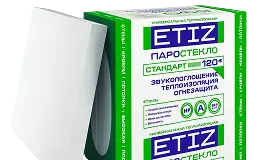
The technology of foaming liquid glass has been known for a long time, but the method of chemical foaming at high temperatures used for this purpose is expensive and has a number of significant disadvantages.
ETIZ's know-how lies in the process of stabilizing liquid glass obtained by cold mechanical foaming.
A unique development — a stabilizer — allows controlling the time of the chemical reaction from the foam state to a rigid porous structure.
We have obtained a material with improved properties and eliminated the drawbacks inherent in chemical foaming.

1. Silicate lump (quartz sand and soda) is cooked in an autoclave to a liquid state.
2. Liquid sodium silicate is foamed in a mixer by mechanical means with the addition of a foaming agent.

3. The melt is poured into molds.

4. Curing at 27–40°C (water is removed, viscosity increases).
5. Cutting into slabs of specified dimensions.
ETIZ foam glass production is organized on a full-cycle basis: raw materials (silicate lump) are delivered to the plant, and finished products are shipped from the same site.
The cost of cold mechanical foaming is 4 times lower than that of chemical foaming. ETIZ foam glass is made from Russian raw materials, which reduces procurement and logistics costs.
All these factors affect the price, which is why ETIZ foam glass is significantly cheaper than other thermal insulation materials in its class.
ETIZ_Foam_Glass_heat_sound_insulation_of_new_generation